July 2025


In This Issue

  • Alt Fuel Highlight RNG

  • Upcoming Webinars

  • Member Spotlight: Arizona Public Service


Alt Fuel Highlight: Renewable Natural Gas


Natural Gas is one of the cleanest burning fuels available today for use in vehicles. Using Compressed Natural Gas (CNG) in heavy duty vehicles produces 27% less carbon dioxide emissions and emits 13-17% less greenhouse gases than diesel. (NGVAmerica) Natural gas traditionally comes from deposits underground, but it can also be made from renewable resources.

Renewable Natural Gas (RNG) is made by processing biogas that has been produced by the anaerobic decomposition of organic matter. This organic matter can be animal manure, landfill waste, solids from wastewater and food waste. RNG created from these sources is fully interchangeable with natural gas and can be used in place of CNG as a vehicle fuel and more.

 RNG is considered carbon-neutral, or even carbon negative, because its production process can capture more greenhouse gases than it emits. Decaying matter from landfills, wastewater treatment plants and livestock manure can release large amounts of harmful methane into the atmosphere. By capturing and using the biogas produced by these sources, RNG operations can significantly lower these greenhouse gas emissions. Renewable natural gas is a source of energy and fuel that is being explored by many as the country works towards a carbon neutral future.

You can learn more about one of the companies taking advantage of the benefits of RNG and CNG in a recently published case study on Ozinga by Argonne National Laboratory. Ozinga is a bulk materials and concrete solutions business that has transitioned its fleet of heavy duty vehicles to CNG and RNG. According to the case study Ozinga’s fleet of around 350 CNG and RNG powered heavy duty vehicles displace about 800,000 gallons of diesel fuel annually. This results in a reduction of approximately 11,000 tons of harmful carbon emissions!

Ozinga’s other business unit, Ozinga Energy, also develops, delivers and sells CNG, RNG and EV solutions to other fleets. Ozinga Energy has operations here in Arizona where it transports manure from several farms to a central digester, which produces carbon-negative RNG. It also transports the milk produced at those dairy farms to a nearby processing plant all using RNG powered vehicles. Read the case study below.

Ozinga Case Study

Upcoming Webinars


Sustainable Cities Network Electric Vehicle Working Group

Leveraging Energy to Communities (E2C) Technical Assistance and Tools to Support Fleet Electrification Planning

Tuesday, August 5, 2025
1:00 PM - 2:00 PM MST | Via Zoom

Join ASU Sustainable Cities Network’s EV Working Group for presentations by the National Renewable Energy Laboratory (NREL) and the World Resources Institute (WRI), where they will showcase the Energy to Communities (E2C) Technical Assistance Program and discuss how communities can leverage E2C and related tools to plan for fleet electrification.


Lauren Reichelt, Project Leader at NREL, will highlight how E2C has supported municipal fleets through peer learning and one-on-one assistance. She will also outline opportunities for fleets to request future technical assistance through E2C. The Energy to Communities (E2C) program, sponsored by the U.S. Department of Energy (DOE), addresses immediate energy challenges and fosters in-depth technical partnerships to help communities build abundant, reliable, affordable, and secure energy systems.

Lacey Shaver, Director of U.S. City Clean Energy Transition at WRI, will share real-world insights and practical tools from the E2C Peer Learning Cohort on Planning for Municipal Fleet Electrification, where local governments collaborated to navigate the shift to electric municipal fleets. Cities and towns across the country are making the switch to electric vehicles—and your community can, too!

Register

SRP Coffee Connection

SRP Fleet Electrification Support

Tuesday August 5, 2025

11:30 AM

Join SRP on Tuesday, August 5 at 11:30 a.m. MST for an educational webinar on SRP’s suite of fleet electrification support offerings. SRP’s Electrification team will present an overview of their no-cost, full-service fleet vehicle and infrastructure assessments and preview the soon to launch SRP self-service online fleet assessment tool, provided by ZappyRide. ZappyRide expert, Ryan Prazen will guide you through the benefits of data-driven insights to navigate the evolving landscape of electric vehicles. SRP will also be covering EV charger and prewire rebates and a Q&A session.

Register

Arizona Public Service provides electricity to 1.3 million customers across Arizona. The utility is committed to providing affordable and reliable energy to its customers while also doing their part to advance the use of clean energy. APS has set a goal of providing 100% clean carbon-free energy to its customers by the year 2050. They are well on their way to achieving this goal as they already provide 51% clean energy to users in their region. The company is also helping its customers adopt clean energy by providing support and incentives for EV’s and energy efficient upgrades and practices. Learn more about APS and its commitment to clean energy, community and sustainability by visiting their website.


VSCCC strives to provide alternative fuel information to all people within our region. In order to increase our outreach abilities we are working with local agencies to share our newsletter and clean fuel resources with an even greater audience. We are proud to partner with the Inter-Tribal Council of Arizona's Air Quality Department, ASU's Sustainable Cities Network and Maricopa County Air Quality Department.

May 2025


In This Issue

  • Alt Fuel Highlight Propane

  • FTA Low or No Emission and Grants for Buses Funding Opportunity

  • Upcoming Webinars

  • Happy Retirement to our Board Member Larz Garcia

  • Member Spotlight: City of Phoenix


Alternative Fuel Highlight: Propane

Propane autogas is a domestically available, high energy, low cost, cleaner burning alternative fuel that can be used to power many types of vehicles. It is the world's third most common transportation fuel, behind gasoline and diesel and is produced as a byproduct of natural gas processing and crude oil refining. Propane has many benefits including a high octane rating, lower fuel, infrastructure and maintenance costs, and reduced emissions. It is also environmentally friendly in that it presents no threat to soil, surface water, or groundwater if spilled or released. It also provides comparable driving range to conventionally fueled vehicles.

When used as a vehicle fuel, propane can offer life cycle greenhouse gas (GHG) emissions benefits over conventional fuels. Argonne National Laboratory's Greenhouse Gases, Regulated Emissions, and Energy Use in Transportation (GREET) model estimates that propane use can reduce GHG emissions by nearly 13%, and when derived as a byproduct of natural gas production, it can reduce petroleum use by 99%.

Renewable propane is also an option for fueling vehicles. This propane is made from non-petroleum feedstocks such as natural fats, vegetable oils, and various types of grease. It is chemically identical to conventional propane and can be used as a drop-in replacement fuel in all propane applications. This renewable propane can have a carbon intensity four times lower than that of conventional propane.

Propane is a just one of many alternative fuels that can be used in the transportation sector to help lower harmful emissions and improve air quality in our communities. Many fleets turn to propane powered vehicles because the fuel and associated infrastructure costs are lower than some other alternative fuel options. This cost effectiveness, as well as the environmental, and health benefits of using propane make it a popular option for school bus fleets and other medium to large vehicles.

To learn more about propane check out the Propane Education and Research Council website.

Read how The Mountain Line Transit Authority (MLTA) propane testing program in Western Virginia is showing increased efficiencies and fewer emissions by using propane vehicles in it’s fleets.

MLTA Propane Story

FTA Low or No Emission and Grants for Buses and Bus Facilities Funding Opportunity

The FTA has announced the availability of approximately $1.5. billion to support state and local efforts to buy buses; build bus facilities; and support workforce development.  

The competitive grant funds are available through a Notice of Funding Opportunity (NOFO) for FTA’s Grants for Buses and Bus Facilities and Low or No Emission programs.  

FTA's Grants for Buses and Bus Facilities Program supports transit agencies in buying and rehabilitating buses and vans and building bus maintenance facilities. FTA’s Low or No Emission Program makes funding available to help transit agencies buy or lease U.S.-built low- or no-emission vehicles, including related equipment or facilities.

FTA is prioritizing transit agencies that describe how their projects will improve the accessibility of transportation for families with young children, with a focus on improved access to jobs, healthcare and retail.     

Applications are due by July 14, 2025. 

Potential applicants to the FY25 Grants for Buses and Bus Facilities Program and Low or No Emission (Low-No) Program are welcome to register for and attend the scheduled webinar on June 4, 2025 from 2:00 – 3:30 p.m., ET.

Learn more

Upcoming Webinars


Propane Presents Technology Series: First Responder Training

Date: May 29, 2025

Time: 2 PM ET

Propane safety is a core industry value and starts with each propane provider's commitment to protecting their customers, employees, and communities.    

Join PERC, Thursday, May 29, 2025 at 2pm EDT for their latest webinar in the “Propane Presents” series to learn why there has never been a better time to engage with first responders in your community about propane safety training.   

PERC’s Senior Vice President of Safety, Education, and Compliance, Eric Kuster, and Director of Safety and Compliance, Lyndon Rickards, will be joined by Mark Anderson of Dead River Company, Ed Otis of Star Group, and Chris Angermuller of the International Association of Fire Chiefs to discuss how building relationships and engaging with first responders helps ensure they are prepared to respond and safely work with industry experts if a propane accident occurs.

To explore upcoming webinars in the Propane Presents Technology Series, or to view past presentations, click here.

Register

ACT EDucation Series Webinar: Creating a Future-Fit Fleet

Date: Thursday, May 29, 2025

Time: 11:00 a.m. PT

Collaboratively launched with Castrol’s Fleet masters content platform, the Future-Fit Fleet study was designed to help fleet managers navigate these challenges and ensure they are prepared for what comes next. Incorporating insights from more than 1,500 fleet managers, it is one of the largest studies to investigate the management of commercial fleets.

The upcoming webinar will feature an expert panel from the commercial fleet industry, that will focus on the insights from the different markets and how they compare.

Join this one-hour webinar to find out what it means to be a Future-Fit Fleet, learn about some of the key findings from the Future-Fit Fleet research, discover how fleets performance compare to the different markets, discover best practices to match your fleet’s unique load profile with reliable, cost-effective power, and gain first-hand insights from an expert panel on some of the solutions that can affect positive change for fleet managers across the world

Register

Low or No Emission and Grants for Buses Programs Application Webinar

Date: June 4, 2025

Time: 2-3:30 pm ET.

Potential applicants to the FY25 Grants for Buses and Bus Facilities Program and Low or No Emission (Low-No) Program are welcome to register for and attend the scheduled webinar on June 4, 2025 from 2:00 – 3:30 p.m., ET. Webinar attendees will learn about program eligibility, evaluation criteria and selection considerations, and the submission process.

FTA is committed to providing equal access to these sessions for all participants. If you need alternative formats, options, or services, please email ftalownobusnofo@dot.gov.

Register

Expanding Your Fleet with Electric Emergency Service Vehicles

Date: Aug 21, 2025

Time: 11:00 AM Arizona Time

Emergency service vehicles like fire engines, police vehicles, and transport and support vehicles, are electrifying across municipalities. Join us for a conversation with leaders around the United States on how they implemented this technology into their current system and see what an all-electric future looks like for fleet vehicles.

This webinar will be Thursday, August 21 at 2 p.m. ET/11 a.m. PT. (11:00 AM Arizona Time)

Register

Happy Retirement to Board Member Larz Garcia!

Our long time board member Larz Garcia is retiring this month. Larz has been an active board member of our coalition for 8 years! Over the years, Larz has been a wonderful board member and friend. He has joined us at countless events and activities, always happy to lend a helping hand and share his knowledge and expertise with us from his work at the Maricopa County Air Quality Department. He has been an integral part of our coalition and has helped us and many others improve the air quality of our region. We will miss having him on our board but wish him all the best in his retirement. Thank you Larz!


VSCCC is proud to have the City of Phoenix as a member of our coalition. As one of the largest and fastest growing cities in the USA, Phoenix is a great place to live, work and visit. The city is also a leader in alternative fuel use and sustainable practices. The City of Phoenix was awarded the Top Green Fleet of 2023 Award from the National Association of Fleet Administrators (NAFA). The City’s fleet includes vehicles that run on a variety of alternative fuels including CNG, RNG, Ethanol and Electricity.


VSCCC strives to provide alternative fuel information to all people within our region. In order to increase our outreach abilities we are working with local agencies to share our newsletter and clean fuel resources with an even greater audience. We are proud to partner with the Inter-Tribal Council of Arizona's Air Quality Department, ASU's Sustainable Cities Network and Maricopa County Air Quality Department.

OUR NEWSLETTER IS ALSO AVAILABLE IN SPANISH

Translations done by Diego Montemayor- Diego@cleanairaz.org

Boletines

April 2025


In This Issue

  • Drive Electric Earth Month Event

  • Clean Cities and Communities

  • Member Spotlight: Salt River Project (SRP)


Drive Electric Earth Month Event

Top Left: VSCCC Chair Mike Heath sits with VSCCC Co-Director Brenna Covert at coalition booth. Top Right: Visitors talk with EV owners and sign up for ride and drives at DEAZ booth. Bottom Left: Some EV’s on display at event. Bottom Right: City of Phoenix Sustainability Department booth welcomes event attendees.

Valley of the Sun Clean Cities Coalition was excited to be a part of another Drive Electric Earth Month Ride and Drive Event with our partners at Drive Electric Arizona, City of Phoenix Sustainability Department and Salt River Project. This years event was held on April 19th at South Mountain Community College and we couldn’t have asked for a more beautiful day to be outside talking to attendees about EV’s.

Our coalition had a booth alongside others including the City of Phoenix, SRP, APS, Roll & Charge, Chapman BMW, San Tan Ford and more. We had a wonderful time sharing information with the event attendees and hearing their ideas and opinions. It was great to see so many people interested in EV’s and taking advantage of this event to learn more. Ride and Drives like this one provide the perfect opportunity for people to talk with real EV owners, ask questions and try driving different types of EV’s all in one spot.

The event was a success and ended up hosting 200 ride and drives! We want to thank everyone involved in putting this event together, especially the amazing volunteers at Drive Electric Arizona and the Valley of the Sun Electric Vehicle Association. They provided their time and their own personal EV’s for this ride and drive event. We are so glad we get to work with such a dedicated and passionate group of people on events like this and look forward to the next one.


Clean Cities and Communities

With Earth day this month bringing attention to ways we can all help our planet, we wanted to share more information on the Clean Cities and Communities Network, one of the many organizations working to improve the health of our world.

Our Valley of the Sun Clean Cities Coalition is just one of 75 other coalitions across the country that make up the National Clean Cities and Communities Network. All of our coalitions work locally within our regions to advance the use of alternative fuels and technologies and to reduce harmful emissions in the transportation sector.

Coalitions implement alternative and renewable fuels, electric vehicles, idle-reduction measures, efficiency improvements, new mobility choices, and emerging transportation technologies. We accomplish this by partnering with local stakeholders such businesses, fuel providers, vehicle fleets, state and local government agencies, and community organizations. Clean Cities Coalitions also work closely with the US Department of Energy and Vehicle Technologies Office. This national partnership allows coalitions to bring DOE developed projects, technical assistance, information resources, online tools and data to our local contacts and use them to help achieve clean transportation goals in our regions.

Since Clean Cities and Communities began in 1993, coalition activities have reduced greenhouse gas emissions by 72 million tons, achieved a cumulative impact in energy use equal to nearly 14 billion gasoline gallon equivalents, and helped put 1.6 million alternative fuel vehicles on the road. VSCCC is proud to be a part of the Clean Cities organization and the work it is doing to reduce emissions and improve the health of not only the planet but the people in our communities.

Clean Cities has many resources, tools, and technical assistance available for anyone wanting to learn more about alternative fuels, transportation technologies and more. For more information check out the Clean Cities Technical Assistance Page or Contact Us at the Valley of the Sun Clean Cities Coalition.


Salt River Project (SRP), is a not-for-profit organization that provides water and power services to more than 2 million people in central Arizona. SRP strives to provide affordable, reliable and sustainable utility services to its customers. In order to achieve this, the utility has set ambitious sustainability goals for itself. For example it has a goal of achieving a 30% carbon emission reduction within their fleet by 2035. Their fleet is working towards this goal by transitioning some vehicles to EV’s. Not only is SRP taking advantage of new technologies such as EV’s in it’s own fleets, it is also providing customers with resources to help them adopt these technologies as well. For example, customers with EV’s can qualify for a home EV charger rebate and take advantage of their Electric Vehicle Time of Use Price Plan.


VSCCC strives to provide alternative fuel information to all people within our region. In order to increase our outreach abilities we are working with local agencies to share our newsletter and clean fuel resources with an even greater audience. We are proud to partner with the Inter-Tribal Council of Arizona's Air Quality Department, ASU's Sustainable Cities Network and Maricopa County Air Quality Department.

OUR NEWSLETTER IS ALSO AVAILABLE IN SPANISH

Translations done by Diego Montemayor- Diego@cleanairaz.org

Boletines

March 2025

In This Issue

  • What is Renewable Diesel?

  • Upcoming Events

  • Other News

  • Member Spotlight: City of Scottsdale


What is Renewable Diesel?

Renewable diesel is an emerging alternative fuel that could make a big impact on fleet and transportation emissions. It is made from fats and oils, such as tallow or used cooking oil, and is processed to be chemically the same as petroleum diesel.

This renewable fuel has many benefits including a 25% to 75% reduction in carbon intensity compared to its petroleum counterpart, as well as lower nitrogen oxide and particulate matter emissions. It is also a “drop in” fuel, meaning it can be used in any diesel vehicle with no need for engine modifications. Another benefit of this renewable fuel is that unlike other alternative fuels, it doesn’t require special fueling or storage infrastructure. Adopters of renewable diesel can use existing diesel facilities and fueling systems.

Though similar in some ways, renewable diesel is not the same as biodiesel. The processes used to produce renewable diesel is different from those used for making biodiesel. Renewable diesel is also different in that it can be used as a direct replacement for diesel. Biodiesel on the other hand is usually blended with a percentage of petroleum diesel.

A fellow Clean Cities Coalition recently shared a case study on their work with the city of Oakland’s transition to renewable diesel fuel. East Bay Clean Cities Coalition, led a pilot project with the city’s fleet to adopt renewable diesel. Within the program’s first year, the city’s fleet displaced 230,000 gallons of petroleum. Today, the entirety of the city’s diesel fleet runs on this renewable alternative fuel produced from waste cooking oils collected from local restaurants. The city’s pilot program demonstrated the great potential of renewable diesel. Learn more about this case study HERE.


Upcoming Events


Phoenix Electric Vehicle Ride and Drive Event

April 19, 2025, 8am-12pm

The City of Phoenix invites you to the Drive Electric Earth Month (DEEM) Phoenix Electric Vehicle (EV) Ride and Drive on April 19, 2025, from 8:00 AM to 12:00 PM at South Mountain Community College. This exciting event gives you the opportunity to hang out with EV owners, test drive EVs, learn about their many benefits, and see how these vehicles are shaping a cleaner, more sustainable future. EVs help reduce greenhouse gas emissions, save money on fuel, and offer a smoother, quieter ride. This event is part of the City’s commitment to reducing GHG emissions by 50% by 2030 and achieving net-zero emissions by 2050. Register today to drive toward a cleaner, greener Phoenix!

Register

Green Living Magazine’s

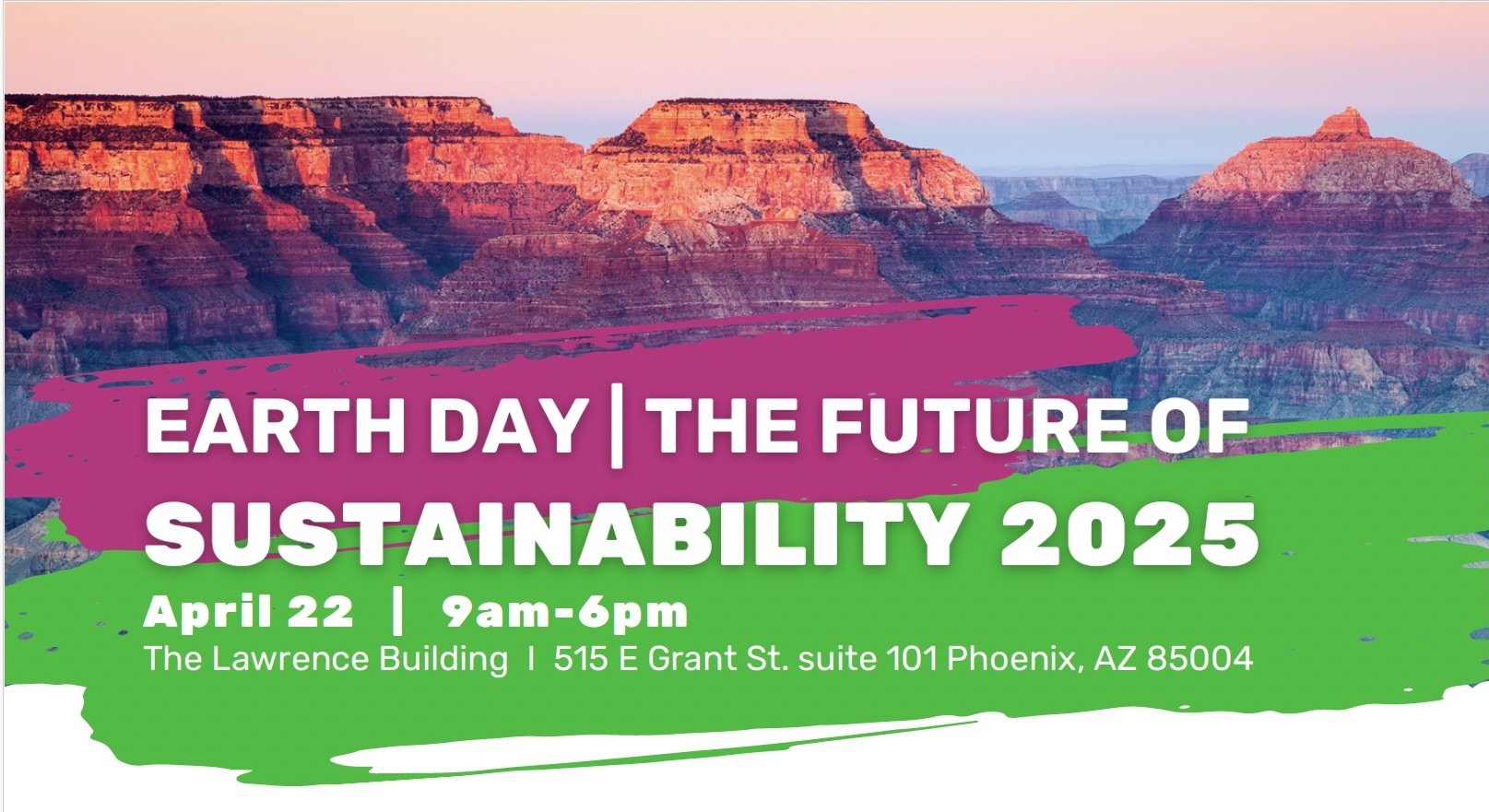
Future of Sustainability Event

April 22, 2025, 9am-6pm

Green Living Magazine invites everyone to attend its 2025 Future of Sustainability Event on April 22, 2025. Take part in engaging, hands-on workshops and hear from inspiring speakers, including government officials, public health professionals, and wellness advocates. This is a must-attend celebration filled with fun and learning for the entire community!

Learn more

Advanced Clean Transportation Expo

April 28-May 1, 2025

Each year, ACT Expo brings together fleet operators, OEMs, and technology providers to spotlight solutions that can help fleets improve efficiency, reduce costs, and stay ahead in a rapidly changing market. With numerous product launches, strategic announcements, and valuable networking opportunities, ACT Expo provides the ideal platform for fleet operators to connect with industry leaders and drive success in a competitive landscape. 

Learn more

Other News


City of Phoenix- 2025 Action Plan Update Public Survey

As part of the comprehensive climate action planning efforts, the City of Phoenix Office of Environmental Programs is embarking on the 2025 action plan updates that will inform the development and next iteration of the climate action plan, food action plan, and energy access plan.  An important part of updating these plans is connecting with City of Phoenix residents to understand needs, concerns, experiences, and perspectives. Residents are invited to take a survey as part of city planning efforts. Survey results will shape future efforts, help inform allocation of resources, and improve the quality of life of all Phoenicians. 

Take the Survey

Take the Phoenix Bus Rapid Transit Survey

Comment Period Ends April 6, 2025

There is still time to take the Bus Rapid Transit (BRT) survey! Now is the time to provide input on how BRT is implemented. There are two options, one with dedicated bus lanes in the curb lane (side-running) and one with dedicated bus lanes in the center of the road (center-running). Your preference will help guide the design of BRT on 35th Avenue. 

Please visit the program website at www.meetphoenixbrt.com to learn more about the project and the lane options, then take a brief survey. The comment period ends April 6, 2025. Your opinion matters and makes a difference! 

Learn more

 HOV Lane Access for Alt Fuel Vehicles Could End in September

The current provision of a federal code that exempts alternative fuel vehicles in Arizona from the HOV lane restrictions may be expiring. ADOT sent out an announcement explaining that the Federal Highway Administration has informed Arizona that eligible alternative fuel vehicles with only a single occupant will no longer have access to high-occupancy vehicle lanes during restricted times as of Sept. 30, 2025. Currently eligible alternative fuel vehicles include those operating entirely on natural gas, propane, hydrogen, electric and others.

Based on this notice, ADOT has established a website at azdot.gov/HOVRule to help alternative fuel vehicle owners and others prepare for the change.

Learn more

The city of Scottsdale is ranked as one of the most desirable communities to live and work in and is also a popular tourist destination in Arizona. Scottsdale has also been a long time member of Valley of the Sun Clean Cities Coalition and shares our goal of improving air quality through the use of alternative fuels. Over the years the city has worked to reduce emissions and continues to explore sustainable solutions for its fleet and operations. For example, the city uses Compressed Natural Gas in its solid waste trucks and bus trolleys and will soon be using Renewable Natural Gas in these vehicles for even greater carbon reduction.


VSCCC strives to provide alternative fuel information to all people within our region. In order to increase our outreach abilities we are working with local agencies to share our newsletter and clean fuel resources with an even greater audience. We are proud to partner with the Inter-Tribal Council of Arizona's Air Quality Department, ASU's Sustainable Cities Network and Maricopa County Air Quality Department.

OUR NEWSLETTER IS ALSO AVAILABLE IN SPANISH

Translations done by Diego Montemayor- Diego@cleanairaz.org

Boletines

February 2025


In This Issue

  • Remembering Bill Sheaffer

  • Upcoming Events

  • Member Spotlight: ADOT


Remembering Bill Sheaffer

VSCCC Founder and Friend

It is with great sadness that we share the passing of our friend and founding director of the Valley of The Sun Clean Cities Coalition, Bill Sheaffer. Bill passed away the morning of February 13 at his home. Bill touched the lives of so many people in his lifetime, and we will always remember his lasting friendship, strong independent personality and his passion and dedication to the advancement of clean fuels.

Valley of the Sun Clean Cities Coalition (VSCCC) owes so much to Bill. He was instrumental in the founding of VSCCC and making it the successful coalition that it is today. Thanks to Bill’s hard work and dedication VSCCC has been advancing the use of clean fuels in Arizona since 2001.

Bill accomplished great things during his time as Executive Director of VSCCC. Some of his many accomplishments include, making sure alternative fuels were included in the Arizona Emergency Management Plan in 2012, and helping Arizona Department of Transportation lay the groundwork for alternative fuel corridor designation along Arizona’s highways and interstates. He also played a large role in the standardization of biofuels in Arizona, which encouraged the adoption and use of biofuels by fleets.

His work with stakeholders and fleets in our region helped Arizona become a leader in alternative fuel use and petroleum fuel displacement. In honor of his work at VSCCC, Bill was inducted into the U.S. Department of Energy Hall of Fame in 2019 and awarded with an Alumni Appreciation award by Arizona State University in 2021.

Even after retiring as executive director, Bill remained a valued consultant and friend to everyone at the coalition. He will be sorely missed, and we will hold him in our hearts as we continue our work at VSCCC, the coalition he founded so many years ago.


Upcoming Events


Drive Electric Earth Month Phoenix EV Ride and Drive – April 19, 2025

The City of Phoenix invites you to the Drive Electric Earth Month (DEEM) Phoenix Electric Vehicle (EV) Ride and Drive on April 19, 2025, from 8:00 AM to 12:00 PM at South Mountain Community College. This exciting event gives you the opportunity to hang out with EV owners, test drive EVs, learn about their many benefits, and see how these vehicles are shaping a cleaner, more sustainable future. EVs help reduce greenhouse gas emissions, save money on fuel, and offer a smoother, quieter ride. This event is part of the City’s commitment to reducing GHG emissions by 50% by 2030 and achieving net-zero emissions by 2050. Register today to drive toward a cleaner, greener Phoenix!

Register

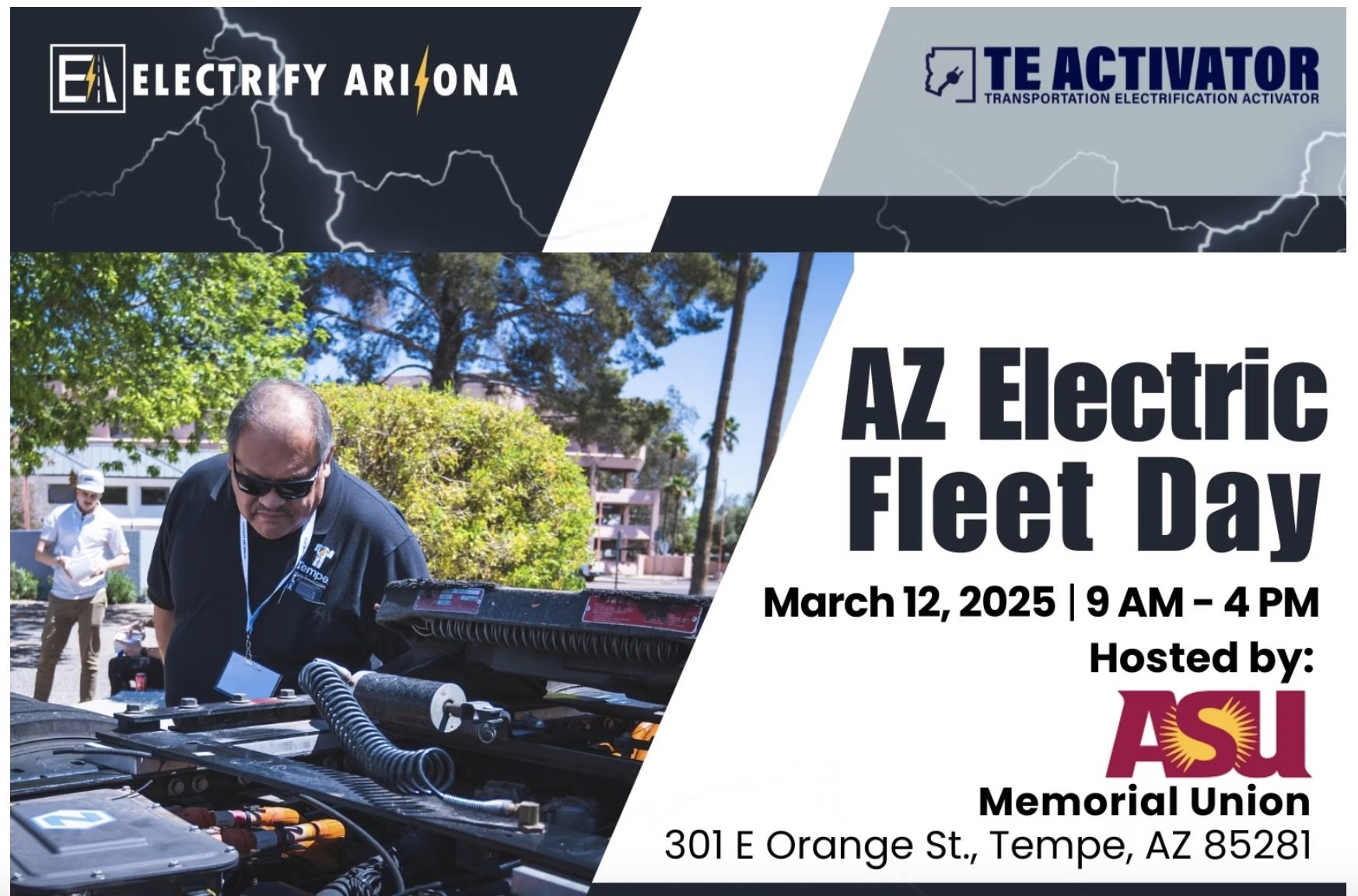
Arizona Electric Fleet Day - March 12, 2025

AZ Electric Fleet Day is proudly hosted by Arizona State University! This event brings together industry leaders, policymakers, fleet managers, and sustainability enthusiasts to explore the transformative potential of electric fleets. With Arizona at the forefront of innovative transportation solutions, this gathering is a unique opportunity to share insights, network, and drive the future of clean energy mobility.

At Arizona State University, sustainability and innovation are core values, making it the perfect venue for this forward-looking event. From discussions on cutting-edge EV technologies to strategies for achieving fleet electrification goals, AZ Electric Fleet Day empowers attendees to lead the charge toward a greener, more efficient future. Join us as we accelerate the transition to sustainable transportation in Arizona and beyond!

Register

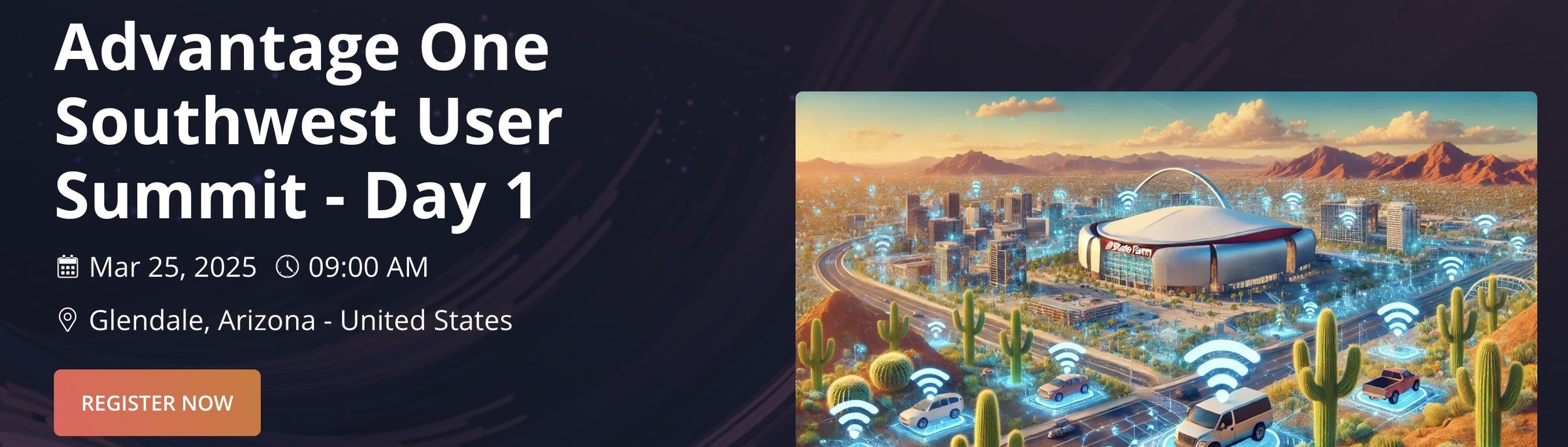
Southwest User Summit- March 25-26, 2025

The Advantage One Southwest User Summit is a no-cost event tailored specifically for public sector fleet professionals. This gathering provides an excellent opportunity for attendees to explore the transformative potential of telematics in fleet management. Whether or not you're already a Geotab customer, the summit will showcase the Geotab telematics platform and demonstrate how it integrates with essential business systems to enhance fleet operations.

Key highlights of the event include:

Connected Vehicle Deep Dive: Discover how vehicle & telematics data can revolutionize fleet management with actionable data insights and seamless integration capabilities.

Integration of Essential Business Solutions: Gain insights into the added functionality and efficiency achieved by integrating tools that will compliment what you may already have in place today.

Vehicle Maintenance & Lifecycle: streamline work order management, ensure automated scheduling based on diagnostics, real-time status and vehicle availability updates, reduction in downtime for an optimized preventative maintenance program. Gain further insights with a comprehensive view of vehicle total cost of ownership (TCO) to better budget, extend asset life and improve operational efficiency.

Fleet Sustainability Planning & Programming: Leverage vehicle data and insights to assess strategic procurement of EVs. Learn how our Greenfleet Dashboard can impact sustainability initiatives and assist with effective EV infrastructure planning. Accelerate electrification adoption and usage in both fleet and commuter vehicles with IRS-compliant reimbursement programs and advisory services designed for both financial and carbon savings.

Driver & Vehicle Safety Initiatives & Strategies: Reduce liability, cut accident investigation costs, and protect your drivers with advanced safety programming using dash cams, sensors and other peripherals that provides real-time incident footage for faster claims processing, driver exoneration, and a safer fleet. In the event of an collision, get another layer of visibility through Geotab's Accident Reconstruction tool.

Public Works-Specific Tools: Explore tools and solutions tailored to meet the unique needs of public sector fleets.

Group Discussions and Networking: Share and learn best practices during dedicated group/user discussions and hear directly from customers about their success stories.

Register

The Arizona Department of Transportation is a multimodal transportation agency serving Arizona. ADOT is responsible for planning, building and operating a complex highway system in addition to building and maintaining bridges.

ADOT is also working towards reducing emissions with programs such as its Electric Vehicle Infrastructure Deployment Plan and the National Electric Vehicle Infrastructure (NEVI) Formula Program. The NEVI program provides funding for the deployment of publicly accessible EV chargers nationwide along designated alternative fuel corridors (AFC). Arizona’s designated AFC’s currently include the interstates and several other state highways. Late last year, ADOT announced the first 18 stations that have been conditionally awarded NEVI funds for EV infrastructure installation. Construction at these sites is expected to begin at the end of 2025. Visit ADOT’s website to learn more.


VSCCC strives to provide alternative fuel information to all people within our region. In order to increase our outreach abilities we are working with local agencies to share our newsletter and clean fuel resources with an even greater audience. We are proud to partner with the Inter-Tribal Council of Arizona's Air Quality Department, ASU's Sustainable Cities Network and Maricopa County Air Quality Department.

OUR NEWSLETTER IS ALSO AVAILABLE IN SPANISH

Translations done by Diego Montemayor- Diego@cleanairaz.org

Boletines

January 2025

In This Issue

  • ADOT Requesting Phase 2 NEVI Proposals

  • Funding Opportunities

  • Webinars

  • Partner Newsletters


ADOT Requests Phase 2 Proposals for NEVI Charging Stations

Arizona Department of Transportation (ADOT) is asking for proposals from entities to design, build and operate EV charging infrastructure along specified state roads as part of the National Electric Vehicle Infrastructure (NEVI) Program. The NEVI program provides funding for the deployment of publicly accessible EV chargers nationwide along designated alternative fuel corridors (AFC’s).

Arizona has designated all of it’s interstate highways as well as several state roads as AFC’s. This is the second request for proposals from ADOT for the NEVI program and is for charging stations at 32 locations along designated state roads. A detailed map of these locations is included in the Request for Proposals. The first request was sent out last year and resulted in conditional NEVI awards for 18 sites along Arizona’s designated interstates, I-10, I-8, I-40, I-17 and I-19.

All awarded stations will be privately owned and operated, with federal funds covering up to 80% and the private developer covering a minimum of 20% of the eligible project costs. No state funds will be involved in the construction of these stations. 

More about the program can be found on the Arizona Electric Vehicle Program page.

Questions related to the procurement can be sent to:

ADOT is using an online, web-based platform to receive submittals from Proposers. Proposers should submit all questions, notices, Proposals, and other submissions through the Submittal Platform. Responses to questions will also be publicly posted.

To register as an interested Proposer on the Submittal Platform, Proposers must click on the link below and provide the requested information:

Submittal Platform Registration

Proposals due date: April 18, 2025, at 2:00PM MST. 


Funding Opportunities


Rural and Tribal Assistance Pilot Program

Department of Transportation (DOT) offers funding to support transportation project development in rural and tribal communities that may lead to future applications to DOT credit and grant programs. Funding can support legal, technical, and financial advisors to help advance infrastructure projects.

Application Deadline: Application portal opens on 3/4/2025, and closes on 4/3/2025


Community Energy Innovation Prize

The US Department of Energy offers this competition to support grassroots innovation, entrepreneurship, capacity building, and economic development for clean energy programs to support activities that address local challenges for energy efficiency, manufacturing, and transportation.

Application Deadline: 6/20/2025


Energy Improvements in Rural or Remote Areas

The US Department of Energy’s Office of Clean Energy Demonstrations (OCED) introduces this new opportunity to provide support for rural and remote communities to build clean energy projects that benefit their communities. This program serves communities of 10,000 people or fewer. For more clean energy funding opportunities at OCED click here.

Concept Paper Due: 2/27/2025


Tribal Clean Energy Planning and Development

The Office of Indian Energy is extending the deadline of the Tribal Clean Energy Planning and Development – 2025 funding opportunity to Feb. 6, 2025 at 5 p.m. ET.

Through the $25 million funding opportunity announcement, the Office of Indian Energy anticipates making approximately 20–40 awards that range from $100,000 to $2,500,000 for projects that support the planning, assessment, and development of clean energy for Tribal buildings or on Tribal lands.

Download the funding opportunity announcement to apply. Review the webinar for more information.

Application Deadline: Feb. 6, 2025 at 5 p.m. ET.


2025 Vehicle Technologies Office Program Wide Funding Opportunity

The U.S. Department of Energy (DOE) announced the Fiscal Year 2025 Vehicle Technologies Office (VTO) Program Wide funding program. This funding opportunity will award up to $88 million for projects that will seek innovative transportation solutions for on- and off-road vehicles.Topic areas in the funding opportunity include: 

  • Technologies for Enhanced Lithium-Ion Cell Safety

  • Low-Cost Production of Lithium

  • Lithium-Metal Surface Protection

  • Ultra-Long-Cycle Life Lithium-Ion Batteries for Heavy-Duty Electric Trucks

  • Standardized Battery Module Design for Heavy-Duty Electric Trucks

  • Thermal Technologies for Zero-Emission Vehicles (ZEVs)

  • Optimized Grid Planning for Electric Vehicles (EVs) using Advanced Metering Infrastructure

  • CROP: Co-located Renewable Fuel and Off-road Vehicle Pilots

  • Vehicle Life Cycle Analysis Baseline

  • Quality Improvements of Battery Busbar Joining

  • Electric Vehicle Workforce Development

  • Vehicle Technology Integration Open Topic

Concept Paper Due: April 1, 2025 at 5:00 p.m. ET.


Webinars


Run on Less – Messy Middle Bootcamp Webinar Series

February 11 – July 15, 2025 at 10 a.m. PT | 1 p.m. ET

Beginning in February, NACFE will conduct a 13-session “Run on Less – Messy Middle Bootcamp” webinar series in coordination with ACT News. Three sessions will focus on diesel and natural gas vehicles, battery electric vehicles and hydrogen, and will feature a unit recap workshop after each set of technology sessions and a close out session at the end that will focus on other fuel-efficiency technologies.
The first Bootcamp session will be held Tuesday, February 11, at 1 pm ET/10am PST and subsequent bootcamp sessions are every other week.

Webinar 1: February 11 | Diesel Drop-In Alternatives

Webinar 2: February 25 | Decarbonizing with Natural Gas

Webinar 3: March 11 | Future Prices & Availability of Existing Infrastructure

Webinar 4: April 8 | The Current State of HD BEV

Webinar 5: April 22 | Strategizing Successful HD BEV Adoption

Webinar 6: May 6 | Charging Depots, Networks, & the Economics of Fleet Electrification

Webinar 7: June 3 | The Production Processes of Hydrogen Fuel

Webinar 8: June 17 | The Distribution and Storage of Hydrogen Fuel

Register

More Newsletters

Check out these newsletters from our partners, and other relevant organizations for more news and useful information.

Drive electric Arizona
ASU Sustainable Cities network
Vehicle Technologies Office

VSCCC strives to provide alternative fuel information to all people within our region. In order to increase our outreach abilities we are working with local agencies to share our newsletter and clean fuel resources with an even greater audience. We are proud to partner with the Inter-Tribal Council of Arizona's Air Quality Department, ASU's Sustainable Cities Network and Maricopa County Air Quality Department.

OUR NEWSLETTER IS ALSO AVAILABLE IN SPANISH

Translations done by Diego Montemayor- Diego@cleanairaz.org

Boletines