In This Issue
Alternative Fuel Highlight: Sustainable Aviation Fuel
Alt Fuel Resources
Funding Opportunities
Alt Fuel Highlight: Sustainable Aviation Fuel
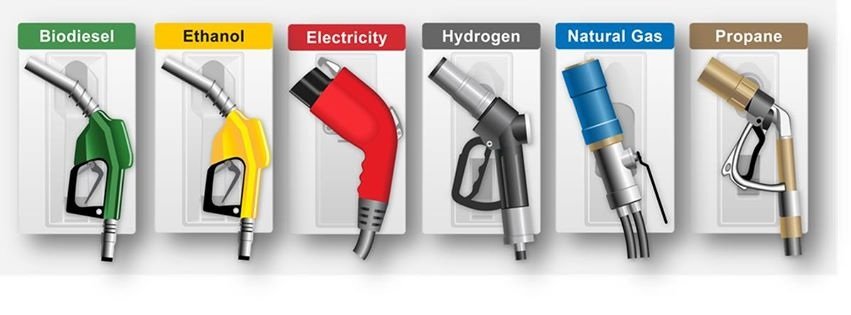
While our coalition usually focuses on ground transportation when working to reduce emissions, it is also important to consider emissions from air transportation. Air transportation accounts for 2% of all carbon dioxide (CO2) emissions and 12% of all CO2 emissions from transportation worldwide. One solution to reducing these emissions is Sustainable Aviation Fuel (SAF). Sustainable Aviation Fuel is an alternative fuel made from non-petroleum, bio based renewable feedstocks. These feedstocks can include food waste, municipal and agricultural waste, fats, greases and oils. SAF can be blended with conventional jet fuel at different levels between 10% and 50%, depending on the feedstock and can be used in existing aircraft and infrastructure. It can also reduce CO2 emissions by up to 80% when compared to conventional jet fuel.
Sustainable Aviation Fuel is currently being adopted by airlines and airports throughout the USA and Europe. SAF is even being used here in Arizona by Sedona Airport and Scottsdale Airport. According to the Environmental Protection Agency (EPA), approximately 24.5 million gallons of SAF was used in 2023.
Research on different SAF feedstocks, production techniques and blends are still being conducted. In fact, researchers from the National Laboratory of the Rockies (NLR) just released new research evaluating the potential of five emerging aviation fuels, including SAF. The report, An Overview of Potential Future Aviation Energy Carriers, was funded by the National Aeronautics and Space Administration (NASA) and explores the production potential of five fuels: SAF, liquid hydrogen, liquefied natural gas, liquefied ethane, and Jet X.
If you would like to learn more about SAF, research and case studies, check out the DOE’s Alternative Fuels Data Center.
Alt Fuel Resources
Electric Vehicle (EV) Battery and Recycling Fact Sheet
Argonne National Laboratory has prepared a revised EV Battery and Recycling fact sheet. It highlights new challenges and opportunities related to the use of lithium-ion batteries and provides valuable information for those making decisions about EVs and fleet deployment. Download the fact sheet at https://www.anl.gov/esia/reference/ev-batteries-and-recycling.
Propane Education and Research Council (PERC) School Transportation Resources
Visit PERC’s School Bus page to learn about propane for school buses. Read case stories, and download the School Transportation One Sheet with quick facts about propane school transportation. PERC has many more resources, articles, event and training updates on their website. https://propane.com/
Alternative Fuel Vehicle Institute (AFVi): Alternative Fuel Training
AFVi provides quality technical training and consulting on alternative fuel vehicles and fueling for the transportation industry. They offer training for drivers, vehicle technicians, first responders, and more. Courses can be in person, live online, or on demand e-learning. Upcoming training includes CNG Fuel System Inspector Training in August. Learn more at https://afvi.com/training/
ChargeWest Ride Your Range- Scenic EV Roadtrips by State
The ChargeWest group has put together guides on scenic EV roadtrips for each of it’s participating states. Across the eight-state collective, the West’s legendary scenic byways are now easier than ever to explore. Each route is matched with EV charging, sorted by trip distance so you can pick your path, from quick scenic loops to all-day excursions. Plan your next EV road trip here: https://chargewestev.org/ride-your-range/
National Fire Protection Agency- EV Safety Guides, Training and Resources
The National Fire Protection Agency has a wealth of resources on EV safety including training courses, studies and downloadable safety and reference guides. Below are just some of the reference materials offered.
-Electric and hybrid vehicle quick reference guide- Fire service edition
-Article on Fire Safety for Electric Vehicles and Other Modern Vehicles in Parking Structures
-Online Training Course-Electric Vehicle Community Preparedness -- Public Edition
Access even more resources here: https://www.nfpa.org/education-and-research/energy-transition/Responding-to-Electric-Vehicle-Fires
Electrification Coalition EV School Bus Resource Page and EC Tech Desk Monthly Resource
The Electrification Coalition (EC) has an updated Electric School Bus Resource Page that includes a step-by-step school bus electrification guide for school district fleet managers. The page also provides practical tips for community engagement, funding identification, and procurement. https://electrificationcoalition.org/schoolbus/
The EC Tech Desk is a monthly resource compiled by the EC’s technical services team that aims to curate transportation electrification’s most relevant news, tools, and resources in a brief, readable format. See the latest edition here: https://electrificationcoalition.org/ec-tech-desk-13/
Funding Opportunities
Funding Announcement for Grants for Buses and Low or No Emission Program
On July 27, 2026, FTA announced the availability of $610 million under the FY26 Notice of Funding Opportunity for the Grants for Buses and Bus Facilities Infrastructure Programs, which include the Grants for Buses and Bus Facilities Program and the Low or No Emission Program.
The Grants for Buses and Bus Facilities Competitive Program makes federal resources available to states and direct recipients to replace, rehabilitate and purchase buses and related equipment and to construct bus-related facilities, including technological changes or innovations to modify low or no emission vehicles or facilities. Funding is provided through formula allocations and competitive grants. Of the announced funding, approximately $21 million is authorized under the Grants for Buses and Bus Facilities Program.
The Low or No Emission competitive program provides funding to state and local governmental authorities for the purchase or lease of zero-emission and low-emission transit buses as well as acquisition, construction, and leasing of required supporting facilities. Of the announced funding, approximately $589 million in funding is authorized under the Low or No Emission Program. Learn more about the program at https://www.transit.dot.gov/lowno
Applications are due by September 21, 2026.